


Index
-
What is engineered wood flooring?
-
Colours available
-
Price ranges
-
Finishes explained
-
Choosing flooring by room
-
Board widths
-
Wood species (oak & walnut)
-
Installation methods
-
Engineered wood vs alternatives
-
Thickness guide
-
Underfloor heating compatibility
-
Durability & performance
-
Common problems
-
FAQs
-
Final buying checklist
Engineered wood flooring has become a go-to choice for homeowners who want the natural look and feel of real timber, without some of the limitations that come with traditional solid wood boards. It’s a practical option for modern homes because it’s designed to be more stable when conditions change throughout the year.
If you’re deciding between thicknesses, finishes, fitting systems, or even engineered wood vs other flooring types, this guide breaks down what matters so you can choose with confidence—whether you’re renovating one room or fitting flooring across your home.

What is engineered wood flooring?
Engineered wood is a real wood floor made from layers. The surface you see and walk on is genuine hardwood (often called the wear layer or veneer), bonded to a stable, multi-layer core underneath.
The benefit of that layered build is stability. While solid wood is made from a single piece of timber and can be more reactive to humidity and temperature, engineered wood is designed to reduce excessive movement. That’s why it’s popular in busy households, open-plan spaces, and homes using water-based underfloor heating.
In simple terms: engineered wood gives you the authentic look of hardwood, with a construction designed to cope better with real-life home conditions.

Engineered wood colours (how to choose the right shade)
Colour plays a huge role in how engineered wood looks and feels in your home. The right shade can make a room feel brighter, warmer, more spacious, or more dramatic, while also influencing how visible everyday dust and wear appear over time.
At Flooring365, our flooring is available in the following colours:
Natural
Natural tones highlight the wood’s original character and grain without heavy staining. This colour is often described as a medium shade, making it one of the most versatile options available.
Natural engineered wood works well in:
-
Living rooms and dining rooms
-
Homes with both modern and traditional interiors
-
Spaces where you want a timeless look that’s easy to style
Because it sits between light and dark, natural flooring tends to be forgiving when it comes to dust and everyday marks.
Smoked
Smoked finishes are created by treating the wood to deepen its tone and enhance the grain. The result is a richer, darker appearance with added depth.
Smoked engineered wood is popular in:
-
Statement living spaces
-
Hallways where you want visual impact
-
Homes with industrial or contemporary styling
This colour pairs particularly well with lighter walls, metal accents, and minimalist furniture.
Grey
Grey engineered wood flooring is a favourite in modern interiors. It offers a clean, neutral base that works well with a wide range of colour schemes.
Grey floors are well suited to:
-
Contemporary and Scandi-style homes
-
Open-plan layouts
-
Rooms with plenty of natural light
Grey tones can vary from pale, airy shades to deeper, moodier greys, so it’s always worth viewing samples in your own lighting before deciding.
Coffee
Coffee tones sit at the darker end of the spectrum, offering warmth and depth without the stark contrast of black.
Coffee engineered wood flooring works best in:
-
Larger rooms with good natural light
-
Living rooms and dining areas
-
Homes aiming for a cosy, grounded feel
Darker shades like coffee can make rooms feel more intimate and can also help disguise some day-to-day wear.
Golden
Golden engineered wood flooring brings warmth and character into a space. The colour enhances the natural grain of the wood and creates a welcoming feel.
Golden tones are ideal for:
-
Traditional interiors
-
Family homes looking for warmth
-
Rooms where you want the flooring to feel inviting rather than stark
This shade pairs beautifully with neutral walls, earthy tones, and classic furniture styles.
White
White engineered wood flooring creates a light, open feel and is often chosen to make rooms appear larger.
White floors are popular in:
-
Smaller rooms that need a brighter feel
-
Scandi-inspired or minimalist interiors
-
Spaces with lots of natural daylight
While visually striking, lighter colours can show marks more easily, so finish choice becomes especially important.
Black
Black engineered wood flooring offers maximum contrast and a bold, contemporary look. It’s typically used as a design feature rather than a background element.
Black floors work well in:
-
Large, open spaces
-
Modern interiors with clean lines
-
Rooms where the flooring is intended to stand out
Because black is a very dark shade, it tends to show dust more clearly, so it’s best suited to homes where maintenance is part of the plan.
How to choose the right engineered wood colour
When deciding on colour, consider:
-
Room size and natural light levels
-
Whether you want the floor to blend in or stand out
-
How much day-to-day maintenance you’re comfortable with
-
How the colour works with your walls, furniture, and décor
Ordering free samples and viewing them in different lighting conditions is the easiest way to avoid colour regret and choose a shade that works in your space.

Engineered wood price ranges (what to expect)
Engineered wood flooring is available across a wide range of price points, making it suitable for everything from single-room updates to full home renovations. The price you pay is influenced by factors such as board thickness, wear layer depth, finish, plank width, and overall construction.
At Flooring365, our flooring falls into the following price ranges:
Under £30 per m²
This range is ideal if you’re working to a tighter budget or updating a smaller space.
Flooring under £30 per m² typically offers:
-
Thinner boards, such as 10mm or 13mm
-
Simpler finishes
-
A more streamlined construction
These options work well for bedrooms, home offices, or rooms with lighter foot traffic where cost efficiency is a priority.
£30–£40 per m²
This is a popular mid-range bracket that balances affordability with improved performance.
In this range, you’ll often find:
-
More versatile thickness options, such as 14mm or 15mm
-
A wider choice of finishes
-
Better all-round durability for everyday living
This price range suits living rooms, dining rooms, and family spaces where both appearance and longevity matter.
£40–£50 per m²
Flooring in this range tends to offer a more premium feel and enhanced specifications.
Buyers can usually expect:
-
Thicker boards and improved underfoot feel
-
Wider or longer planks
-
More refined or textured finishes
This range is often chosen for statement rooms or open-plan spaces where the flooring plays a central role in the overall design.
Over £50 per m²
This bracket includes premium flooring designed for long-term use and visual impact.
Floors over £50 per m² often feature:
-
Thicker boards (such as 18mm or 20mm)
-
Wider or extra-wide planks
-
Detailed finishes and characterful surfaces
These options are well suited to large rooms, feature spaces, or homes where the flooring is intended to be a standout element.
What affects the price of flooring?
Several factors influence where a floor sits within these ranges:
-
Board thickness and core construction
-
Wear layer depth
-
Wood species and finish type
-
Plank width and overall size
Understanding these elements helps you decide where it makes sense to invest more—and where a more affordable option may still meet your needs.
Choosing the right price range for your project
When deciding on budget, consider:
-
Which rooms will see the most foot traffic
-
Whether thickness and underfoot feel matter to you
-
How prominent the flooring will be in the overall design
-
Whether you’re flooring a single room or multiple spaces
Matching the price range to the room’s use often leads to better long-term satisfaction than choosing purely on cost alone.

Engineered wood finishes: how to choose the right one
The finish on engineered wood flooring affects far more than how it looks. It plays a key role in how the floor wears over time, how visible everyday marks become, and how much maintenance is required.
Some finishes prioritise a natural, textured look, while others focus on surface protection and ease of care. Choosing the right finish depends on where the floor will be installed and how the space is used.
Below are the flooring finishes available at Flooring365, along with guidance on where each works best.
Brushed & oiled
Brushed & oiled flooring has a subtly textured surface created by brushing out the softer grain of the wood. Oil is then applied to penetrate the surface, enhancing the natural colour and grain.
This finish is well suited to:
-
Living rooms and dining rooms
-
Homes that favour a natural, character-led look
-
Spaces where occasional spot repairs may be useful
It offers a warm, authentic appearance, though it does require more ongoing maintenance than lacquered finishes.
Brushed & lacquered
This finish combines light surface texture with a protective lacquer coating. The brushing highlights the grain, while the lacquer adds a durable layer on top of the wood.
Brushed & lacquered flooring works well in:
-
Busy family homes
-
Hallways and high-traffic areas
-
Rooms where durability is a priority
It balances visual character with easier day-to-day care.
Brushed & matt lacquered
Brushed & matt lacquered flooring offers a similar textured look to brushed finishes, but with a lower-sheen protective layer.
This finish is ideal for:
-
Homes that want a natural look without high shine
-
Contemporary interiors
-
Areas where you want protection without a glossy appearance
It’s a practical choice for modern living spaces where subtle texture and low maintenance are both important.
Lacquered
Lacquered flooring has a smooth surface with a protective coating that sits on top of the wood.
This finish is best for:
-
Kitchens and busy areas
-
Homes that prefer low-maintenance flooring
-
Rooms where spill resistance matters
Lacquered floors are easy to clean and provide strong surface protection, making them one of the most practical options.
Matt lacquered
Matt lacquered flooring offers the same protective benefits as standard lacquer, but with a softer, low-sheen appearance.
This finish suits:
-
Modern and minimalist interiors
-
Open-plan living spaces
-
Homes that want protection without a reflective finish
It helps maintain a natural look while keeping upkeep straightforward.
Oiled
Oiled finishes soak into the wood rather than sitting on the surface, enhancing the natural grain and texture.
Oiled flooring is often chosen for:
-
Feature rooms
-
Traditional or rustic interiors
-
Homeowners who value appearance over minimal upkeep
While visually appealing, oiled floors typically need more regular maintenance than lacquered options.
Distressed
Distressed flooring is designed with intentional marks, texture, and variation to create a time-worn appearance.
This finish works particularly well in:
-
Period properties
-
Farmhouse or character-led interiors
-
Homes where minor marks should blend in naturally
Distressed finishes are often forgiving in busy households because everyday wear is less noticeable.
Handscraped
Handscraped flooring features deeper, more pronounced texture designed to replicate the look of traditional hand-finished timber.
This finish is ideal for:
-
Rustic or country-style homes
-
Statement rooms
-
Spaces where character is a key design feature
The textured surface helps disguise small scuffs and adds strong visual interest.
Unfinished
Unfinished flooring is supplied without a surface coating, allowing you to apply your own stain or finish after installation.
This option is best for:
-
Bespoke projects
-
Matching existing flooring
-
Homeowners who want full control over the final look
It requires additional work after fitting but offers maximum customisation.
How to choose the right finish
When deciding on a finish, consider:
-
How much foot traffic the room receives
-
Whether ease of maintenance or appearance is the priority
-
How visible you want everyday wear to be
-
The overall style of your home
As a general guide, lacquered and matt lacquered finishes suit busy spaces, while brushed, oiled, distressed, and handscraped finishes lean more toward character and texture.

How to choose engineered wood flooring by room
Different rooms place different demands on your flooring. Foot traffic, moisture levels, natural light, and how the space is used day to day all influence which options will work best.
Below is a room-by-room guide to help you choose the most suitable engineered wood flooring for each area of your home.
Living room
Living rooms are one of the most popular places for engineered wood flooring because they balance comfort, appearance, and everyday use.
Engineered wood works well here because:
-
It offers a real wood look for a central living space
-
Its stability suits open-plan layouts and temperature changes
-
A wide choice of colours, widths, and finishes makes it easy to match your style
For busy living rooms, consider a durable finish such as lacquered or brushed & lacquered, and a thickness that feels substantial underfoot.
Dining room
Dining rooms benefit from engineered wood flooring that combines visual impact with practicality.
Good choices for dining rooms include:
-
Finishes that resist everyday wear from chairs being moved
-
Wider boards for a more premium, open feel
-
Colours that complement furniture and lighting
Engineered wood is a strong option here because it delivers a natural look while coping well with regular use.
Kitchen
Engineered wood flooring can be used in kitchens when chosen carefully.
Based on your guidance:
-
Engineered wood is preferred over solid wood in kitchens due to better resistance to moisture and spills
-
A lacquered or matt lacquered finish is typically recommended for added surface protection
Kitchens benefit from engineered wood’s layered construction, but spills should still be cleaned promptly to maintain the floor’s appearance.
Hallway
Hallways are high-traffic areas and often the first impression of your home.
For hallways, prioritise:
-
Durable finishes that don’t show marks easily
-
Textured or character finishes that help disguise scuffs
-
A practical colour choice that doesn’t highlight dust
Engineered wood performs well in hallways when matched with the right finish and board thickness.
Home office
Home offices usually experience lighter foot traffic but still benefit from a comfortable, natural flooring choice.
Engineered wood suits home offices because:
-
It creates a warm, professional feel
-
It’s comfortable underfoot for long periods
-
A wide range of finishes allows subtle or statement styling
Standard or wide boards often work well, depending on room size.
Bedroom
Bedrooms are quieter spaces, but comfort and acoustics matter more—especially upstairs.
For bedrooms:
-
Thicker boards or suitable underlay can help with sound dampening
-
Softer-looking colours often create a calmer atmosphere
-
Engineered wood offers warmth without heavy maintenance
Bedrooms are a good place to balance style and comfort rather than maximum durability.
Utility room
Utility rooms can experience occasional moisture and heavier wear than other areas.
If choosing engineered wood for a utility room:
-
Prioritise a protective finish such as lacquered
-
Ensure good ventilation and prompt spill clean-up
-
Consider moisture-resistant construction options where available
While engineered wood can work, careful product choice is important in these practical spaces.
Conservatory
Conservatories often have higher light levels and more noticeable temperature changes.
Engineered wood is commonly chosen here because:
-
Its layered construction offers better stability than solid wood
-
It copes more effectively with temperature fluctuations
-
A suitable finish can help manage everyday wear
It’s especially important to follow installation guidance and allow proper acclimatisation in conservatories.
Bathroom
Based on guidance:
-
Engineered wood flooring should not be used in bathrooms
-
Only LVT flooring is suitable, as it is 100% waterproof
Bathrooms require flooring designed specifically for wet environments.
Quick room-selection summary
-
Best all-round rooms: living rooms, dining rooms, bedrooms
-
High-traffic focus: hallways, kitchens
-
Special consideration: utility rooms, conservatories
-
Not suitable: bathrooms (use LVT only)
Choosing flooring by room helps ensure the floor not only looks right, but also performs well long-term in each space.

Engineered wood flooring board widths (how wide should your boards be?)
Board width has a big impact on how your flooring looks once it’s installed. The width you choose can influence how spacious a room feels, how visible the grain appears, and whether the floor suits a traditional or modern interior.
At Flooring365, our flooring is available in the following board widths:
Standard width (101mm–150mm)
Standard-width boards are the most traditional option and remain a popular choice in many homes.
These widths work particularly well in:
-
Smaller rooms where very wide boards might feel overpowering
-
Period properties and classic interiors
-
Spaces where you want a timeless, understated wood floor
Standard boards create a busier pattern with more joins, which can suit rooms where subtle texture is preferred over bold visual impact.
Wide plank (151mm–200mm)
Wide planks strike a balance between traditional and contemporary styling, making them one of the most versatile choices.
Wide boards are ideal for:
-
Living rooms and dining rooms
-
Open-plan layouts
-
Homes that mix modern and traditional design elements
The wider surface allows more of the wood grain to be visible, giving the floor a more expansive, premium feel without being overwhelming.
Extra wide (201mm–290mm)
Extra wide boards create a bold, statement look and are often chosen for modern or high-end interiors.
Extra wide planks work best in:
-
Large rooms and open-plan spaces
-
Contemporary homes with clean lines
-
Areas where you want the flooring to be a feature
Because there are fewer joins between boards, extra wide planks can make a space feel calmer and more open. They tend to show off natural grain variation particularly well, especially in species like oak.
How to choose the right board width
When deciding on board width, consider:
-
Room size and proportions
-
Ceiling height and natural light
-
Whether you want a subtle or statement look
-
How visible you want the wood grain to be
A simple rule of thumb:
-
Smaller rooms often suit standard or wide boards
-
Larger, open spaces can handle wide or extra wide planks more comfortably
As with colour and finish, ordering samples and laying them out in your room can help you visualise how different widths will look once installed.
Engineered wood flooring species (what to choose and why)
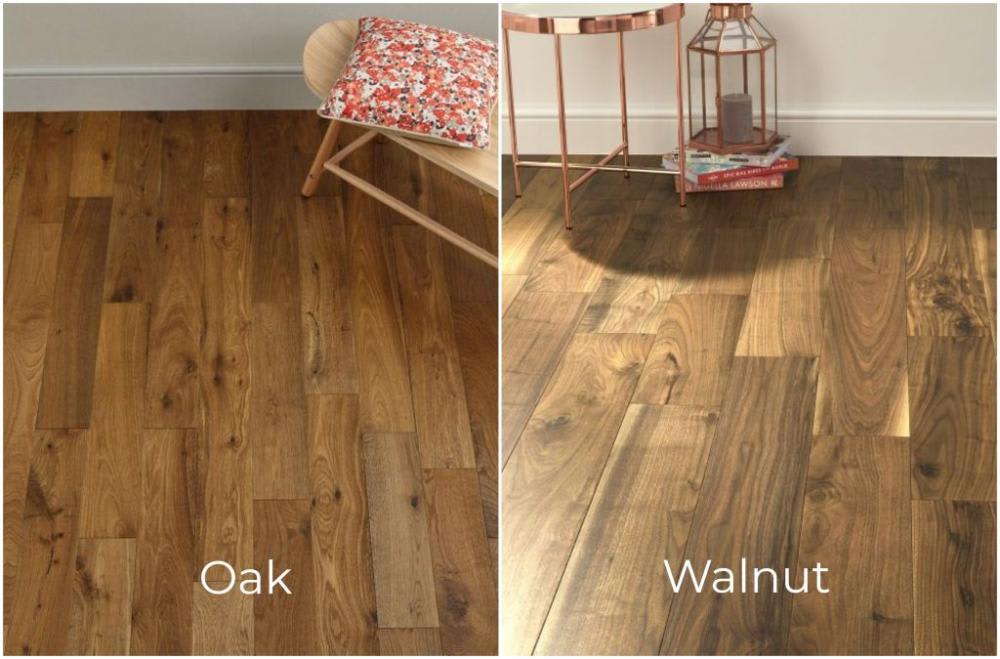
The wood species used for the top veneer of engineered wood flooring has a big influence on how the floor looks, how it wears, and where it works best in the home. Grain pattern, colour variation, and natural hardness all vary by species, which is why this decision matters just as much as finish or board width.
At Flooring365, our flooring is available in oak and walnut, the two most popular and widely chosen species for modern homes.
Oak
Oak is the most common and versatile species used in engineered wood flooring, and it’s the go-to choice for many homeowners.
Why buyers choose oak:
-
Strong and durable, making it suitable for busy areas
-
Distinct, visible grain that suits both modern and traditional interiors
-
Available in a wide range of colours, finishes, and board widths
-
Performs well in high-traffic rooms like living rooms, hallways, and dining rooms
Oak offers an excellent balance between appearance and practicality, which is why it’s often recommended for whole-house installations where consistency and longevity matter.
Walnut
Walnut is known for its rich, darker tones and smoother, more refined grain pattern. It’s often chosen for visual impact rather than all-round durability.
Walnut works best in:
-
Statement spaces such as dining rooms or home offices
-
Bedrooms where foot traffic is lower
-
Homes aiming for a darker, more dramatic look
While walnut is slightly softer than oak, many buyers value it for its depth of colour and distinctive appearance.
Other engineered wood flooring species (general overview)
You may also come across flooring made with other species, such as:
-
Ash
-
Maple
-
Hickory
-
Exotic hardwoods
These species can offer different grain patterns, colour tones, or hardness levels. However, oak and walnut remain the most popular choices because they combine availability, performance, and timeless appeal.
How to choose the right species
When deciding on species, consider:
-
Foot traffic levels in the room
-
Whether durability or visual impact is the priority
-
How bold or subtle you want the grain pattern to be
-
Whether the flooring will be used across multiple rooms
As a simple guide:
-
Oak is the safest all-round choice for busy homes
-
Walnut suits feature rooms or lower-traffic spaces where appearance takes priority
Matching the species to how the room is used helps ensure your flooring looks good and performs well long term.

Engineered wood flooring installation methods (how it’s fitted)
How your flooring is installed affects how it feels underfoot, how permanent the floor is, and how easy it is to install. Choosing the right installation method depends on your subfloor, room size, and whether you’re fitting the floor yourself or using a professional installer.
At Flooring365, flooring is available with the following installation methods:
Click Lok System
Click Lok (also known as click-fit) systems use precision-milled joints that lock boards together without the need for glue or nails.
Why buyers choose Click Lok:
-
Faster and cleaner installation
-
Suitable for floating floors laid over underlay
-
Popular for DIY projects and renovations
-
Boards can sometimes be lifted and replaced more easily
Click Lok flooring is often chosen for bedrooms, flats, and rooms where flexibility or quicker installation is important. It’s commonly paired with HDF cores and works well where the subfloor is already level.
Tongue & Groove
Tongue & Groove boards use a traditional joint where one board slots into the next and is typically glued, nailed, or bonded to the subfloor.
Why buyers choose Tongue & Groove:
-
Creates a more permanent, solid feel underfoot
-
Often preferred for larger or open-plan spaces
-
Suitable for glue-down or nail-down installation methods
-
Common with thicker engineered boards
Tongue & Groove installation is often chosen when long-term stability is the priority or when installing over wooden subfloors.
Click Lok vs Tongue & Groove: how to choose
A simple way to decide:
-
Choose Click Lok if you want quicker installation, flexibility, or a floating floor
-
Choose Tongue & Groove if you want a more permanent fit and a solid feel underfoot
Your subfloor type, room size, and whether you’re installing the floor yourself will usually determine which method is the better fit.
Engineered wood vs solid wood vs laminate (quick comparison)
This is one of the biggest decision points for buyers, so it helps to be direct:
-
Real hardwood surface
-
More stable than solid wood in changing conditions
-
Often suitable for water-based underfloor heating (see section below)
-
Can sometimes be refinished, depending on wear layer thickness
-
Solid timber throughout
-
Can be refinished more times
-
More sensitive to moisture and temperature changes
-
Not suitable with any underfloor heating (based on your guidance)
-
Durable and scratch-resistant
-
Low maintenance and often the cheapest option
-
Not real wood on the surface
-
Thin and should be paired with underlay for sound and heat insulation, plus stability (based on your guidance)
If you want real timber appearance with a more stable structure for everyday use, engineered wood is often the “best of both” for many homes.
Construction & composition (what to check before you buy)
Engineered wood can look similar across ranges, but performance often comes down to what’s underneath the surface.
The wear layer (veneer)
The wear layer is the real hardwood surface. This is where engineered wood gets its authentic grain, texture, and character.
A key buying factor is veneer thickness. You already note an important point: thicker veneers (often above 3mm) can sometimes be lightly sanded and refinished, which can extend the floor’s life when signs of wear appear. Thinner veneers generally aren’t suitable for refinishing in the same way.
The core (strength and stability)
Beneath the veneer is the core structure that provides engineered flooring’s stability. As you’ve listed, cores are often made from layered materials such as plywood, softwood, HDF, or SPC (stone-plastic composite), stacked in alternating directions.
This layered structure helps reduce movement caused by changes in humidity and temperature. It’s part of why engineered wood is commonly chosen for water-based underfloor heating systems and rooms with lots of natural light.
The backing layer
The backing layer balances the plank and adds support against warping.

Engineered wood flooring thickness (how thick should your boards be?)
The thickness of flooring affects how the floor feels underfoot, how it performs over time, and how suitable it is for different rooms. Thicker boards generally feel more solid and can be a better choice for busy areas, while thinner boards are useful where floor height is limited.
At Flooring365, flooring is available in the following thicknesses:
10mm
10mm boards have a slim profile and are often chosen where build-up height is a concern.
Best suited to:
-
Rooms with low thresholds
-
Renovations where matching existing floor height matters
-
Spaces with lighter foot traffic
While thinner, 10mm engineered wood still offers the appearance of real timber with a more compact construction.
13.5mm
13.5mm is a popular mid-range thickness that balances practicality and performance.
Good for:
-
Bedrooms and home offices
-
Living spaces with moderate foot traffic
-
Buyers looking for a balance between cost and durability
It offers a noticeable step up in underfoot feel compared to slimmer boards.
14mm
14mm boards are widely used across many homes due to their versatility.
Works well in:
-
Living rooms and dining rooms
-
Hallways with regular use
-
Homes where durability and comfort both matter
This thickness suits most rooms and is often considered a safe all-round choice.
15mm
15mm boards provide a more substantial feel while remaining practical for most installations.
Best for:
-
Family homes
-
Open-plan spaces
-
Rooms where a solid underfoot feel is important
This thickness is commonly chosen for areas that see frequent daily use.
18mm
18mm flooring offers a premium feel and added robustness.
Ideal for:
-
High-traffic areas
-
Larger rooms
-
Buyers prioritising long-term performance
The increased thickness contributes to a more solid, traditional feel underfoot.
20mm
20mm is the thickest option available and offers maximum durability and presence.
Best suited to:
-
High-traffic areas
-
Long-term installations
-
Homes where flooring performance is a key priority
This thickness is often chosen when longevity and underfoot comfort are more important than minimising floor height.
How to choose the right thickness
When deciding on thickness, consider:
-
Foot traffic levels in each room
-
Whether sound and comfort are important (especially upstairs)
-
How the flooring will meet thresholds and adjacent rooms
-
Whether a more substantial underfoot feel matters to you
As a general guide:
-
Thinner boards suit height-restricted spaces
-
Thicker boards suit busy rooms and long-term use
Choosing the right thickness helps ensure your flooring performs well and feels right in your home for years to come.
Types of engineered wood flooring (how to pick the right build)
Engineered wood flooring isn’t one-size-fits-all. It varies by core construction, wood species, and installation method, which means you can tailor your floor to suit how your home is used, how it’s built, and how long you want it to last.
Understanding these differences makes it much easier to narrow down the right option instead of choosing purely by appearance.
By construction (core types)
The core of an engineered board plays a major role in its stability, strength, and suitability for different rooms.
Plywood core
A traditional and widely used construction that offers excellent stability. Multiple layers of plywood are bonded together in alternating directions, helping the floor cope well with changes in temperature and humidity. This makes plywood-core engineered wood a popular choice for living spaces, kitchens, and homes with water-based underfloor heating.
HDF (high-density fibreboard) core
Dense, compact, and impact-resistant, HDF cores are often paired with Click Lok fitting systems. This makes them especially popular for faster installations and DIY projects. HDF-core engineered wood is well suited to busy areas such as hallways and living rooms, where durability is important.
Softwood core
Typically a more affordable option, softwood cores are lighter in weight and still suitable for many residential settings. They’re often chosen for upstairs rooms where reducing weight can be beneficial. While they may not be as robust as plywood or HDF, they still provide a stable base when installed correctly.
SPC (stone-plastic composite) core
A more moisture-resistant construction that combines a real wood veneer with a rigid, waterproof-style base. While less common in traditional engineered wood ranges, SPC-core boards are often considered where moisture is a key concern, such as kitchens or utility areas.
Underfloor heating: is engineered wood suitable?
Yes—engineered wood flooring is suitable for underfloor heating only if it is water-based (based on your guidance).
Electric underfloor heating is not suitable because it can cause hot spots that may damage the flooring. Solid wood flooring cannot be used with any underfloor heating.
Because this is a common search query, it’s worth repeating clearly on-page to prevent confusion and reduce returns.

Durability & performance: what to expect in real life
Scratch and dent resistance
No wood floor is completely scratch-proof, but engineered wood performs well in everyday settings—especially when paired with a protective finish. If your home is particularly active, textured finishes can be practical because they help disguise minor scuffs.
Moisture resistance
One of engineered wood’s major advantages over solid wood is its improved resistance to moisture-related movement, thanks to its layered construction. That’s why it’s commonly chosen for kitchens, utility rooms, and spaces where conditions can fluctuate.
Longevity and refinishing potential
Engineered wood can last for many years, and as you’ve noted, refinishing may be possible depending on veneer thickness. If refinishing matters to a buyer, veneer thickness should be treated as a “must-check” specification.

Common problems (and how to avoid them)
Gapping, cupping, warping
Often linked to moisture imbalance, inadequate acclimatisation, or subfloor issues.
Noisy or bouncy floors
Usually caused by uneven subfloors, incorrect underlay choice, or poor installation.
Fading in direct sunlight
Wood naturally changes over time, but strong sunlight can accelerate it. Rotating rugs and furniture helps reduce uneven change.
Frequently asked questions (written for rich snippets)
Can engineered wood be used in kitchens?
Yes. Based on your guidance, engineered wood is preferred over solid wood in kitchens due to better resistance to moisture and spills. A lacquered finish is typically recommended for additional spill resistance.
How thick should engineered wood flooring be?
It depends on the room and whether you need a low-profile build-up. Flooring365 offers 10mm, 13mm/13.5mm, 14mm/15mm, 18mm, and 20mm options. Thicker boards generally feel more substantial underfoot and can be a strong choice for high-traffic areas.
Is engineered wood flooring real wood?
Yes. The surface layer (wear layer/veneer) is real hardwood, which provides the authentic look and grain.
Can engineered wood flooring be sanded?
Sometimes. As you’ve noted, many engineered floors can be lightly sanded and refinished when the wear layer is thick enough (often above 3mm). Thinner veneers aren’t generally suitable for refinishing.
Is engineered wood suitable for underfloor heating?
Yes, but only with water-based underfloor heating systems. Electric underfloor heating is not suitable, and solid wood flooring cannot be used with any underfloor heating (based on your guidance).
Is engineered wood flooring a good choice for busy homes?
It can be. Engineered wood’s stability and finish options make it a practical choice for everyday life, especially when matched to the right room and use level.
Final checklist before buying engineered wood flooring
Before you commit, check:
-
Thickness (and how it affects floor height and underfoot feel)
-
Wear layer thickness (especially if refinishing matters)
-
Finish type (based on traffic level and desired maintenance)
-
Installation method (click vs tongue & groove and subfloor suitability)
-
Room suitability (especially kitchens and underfloor heating)
-
Sample testing in your home lighting (morning, afternoon, evening)
Engineered wood flooring is a long-term choice. If you make the decisions above deliberately—rather than picking by colour alone—you’re far more likely to end up with a floor that performs well and keeps its appeal for years.


