Which Flooring Is Best For First-Time Buyers?
Buying a home for the first time is stressful enough, but then there’s decorating & furnishing to think about too. After forking out a lot of money on your mortgage, you’re probably wondering how to save costs on everything else, and we don’t blame you! Especially considering house prices at the moment. Despite the largest drop in over 11 years, UK house prices remain significantly high, with many struggling to afford it. That’s why in this blog, we’ll cover some of the least expensive flooring types you can get, such as laminate, as well as ones that may be worth the investment for you in the long run.
Laminate Flooring
Laminate flooring is by far one of the most budget-friendly options available on the market. Due to this, many homeowners choose to opt for laminate instead of solid wood floors, particularly when working with a tight budget. Not only is it one of the least expensive floorings, but it’s also really easy to install which will save you a large portion of the cost, especially when compared to having parquet flooring fitted for example.
LVT Flooring
Do not let the name luxury vinyl tiles deceive you. LVT is extremely cost-effective and offers much more in terms of durability compared to laminate.
This often encourages people to opt for LVT because it will last much longer than laminate in the long run. Depending on how long you plan on living in your new home, and when you plan to next renovate your rooms, you may find that this is the better option for you. It’s also favoured by busy family homes with children or pets to consider, thanks to its increased durability and waterproof properties.
Engineered Wood Flooring
Engineered wood flooring certainly isn’t the most budget-friendly option out there, but it is one of the most durable. If you plan on moving or selling your home in the future, chances are it will add much more value to the selling price too. Most real estate agents say that wood flooring can add around 2.5% to the selling price so depending on your plans for the future, it could certainly be a worthwhile investment. Unlike laminate, it has a much longer lifespan too. With the right maintenance and care, engineered floors usually last 10-15 years in most domestic environments.
Which flooring is best for me?
There are lots of factors to consider before choosing your flooring, as everyone’s home is different. Below are some of the factors you may want to consider for you and your new home before making a decision.
1. Your Flooring Budget
Budget obviously plays a big part for any first-time buyer and is probably your most important decision. Keeping to your flooring budget requires careful planning and decision-making. Think about how much money you realistically have available to spend on your new flooring as well as any other costs you should include for your planned renovations. If you are planning on renovating the whole house all at once, then you’ll want to save costs wherever possible, and this means that laminate is likely to be your best option.
Tips to help you stay within your flooring budget:
- Establish A Realistic Budget: Determine the maximum amount you can comfortably spend on your flooring project. Consider your overall renovation budget and prioritise accordingly.
- Research Flooring Options: Explore various flooring types, materials, and styles to find the most cost-effective options that meet your requirements. Consider factors such as durability, maintenance, and installation costs.
- Obtain Multiple Installation Quotes: Professional flooring installation prices can vary massively as they often quote their own jobs. To get the best price for the job, you should contact multiple flooring installers and request detailed quotes from them.
- Compare Prices and Quality: Don't just focus on the lowest price. Consider the quality and longevity of the flooring materials. A slightly higher upfront cost might save you money in the long run by reducing maintenance and replacement expenses.
- Measure Accurately: Take accurate measurements of the areas where you plan to install the flooring and don’t forget to include your 10% wastage. This will help you estimate the amount of material required and avoid unnecessary delivery charges or delays to your installation.
- Consider DIY Installation: If you have the necessary skills and experience, installing the flooring yourself can save you a significant amount of money. However, be realistic about your abilities and the complexity of the installation process. Improper installation can lead to costly mistakes. Thankfully, there are easier methods for DIY flooring installations such as the Click Lok system.
- Explore Cost-Saving Alternatives: Look for less expensive flooring options that can still achieve the desired aesthetic. For example, consider laminate flooring instead of hardwood, or LVT instead of ceramic tiles.
- Prioritise High-Traffic Areas: If you have a limited budget, focus on flooring the areas that receive the most foot traffic or require immediate attention. You can always upgrade other spaces later when your budget allows. If you are looking to sell your home in the near future, then focus on living areas such as the living room or kitchen that will provide the highest ROI.
- Factor In Additional Expenses: Don't forget to account for additional costs such as underlay, adhesive, transition pieces, and labour charges for removing old flooring or preparing the subfloor. These expenses can add up quickly if overlooked.
- Plan For Contingencies: Set aside a small portion of your budget for unexpected expenses or emergencies. It's better to be prepared for any surprises that may arise during the flooring installation process.
- Stick To Your Budget: Once you've established a budget, make a commitment to stay within its limits. Avoid unnecessary upgrades or costly changes to your initial plans.
- Shop Around For Deals: Keep an eye out for sales, discounts, or promotions. Timing your purchase strategically can help you save a significant amount of money.
By following these guidelines and making informed decisions, you can successfully keep to your flooring budget while achieving the desired results for your home or project.
For more tips on how to stick to your budget, visit our flooring on a budget blog.
How Much Does Flooring Cost In A New Build?
In order to keep to your budget, you will need to know some approximate prices. The cost of flooring in a new build will vary depending on numerous factors. Factors such as flooring type, room size, house location, and the complexity of the installation will all play a part. However, we've included some estimates for each floor type below. Please note that these cost ranges should be used as guidelines only. For accurate pricing, you should get a quote for the individual product you are looking at and keep an eye out for any sales.
- Laminate: Laminate flooring is a popular and cost-effective choice. However, with so many variations available, prices often fluctuate more from product to product. Therefore, you can expect to pay anything between £10 to £80 per square metre. The quality and thickness of the laminate are usually what has the biggest impact on pricing.
- Carpet: The cost of carpet flooring typically ranges from £10 to £40 per square metre. However, higher-quality carpets and additional features like underlay and stairs will increase the cost and can often go up to around £100 per square metre.
- Solid Wood: Solid wood prices can vary massively due to additional choices such as the wood species, grade, and finish. If the wood is difficult to source, it will always be more costly. However, hardwood flooring usually ranges from £30 to £100 per square metre.
- Ceramic or Porcelain Tile: Tile flooring costs will vary massively depending on the type of tile you choose. On average, ceramic or porcelain tiles in the UK can range from £20 to £80 per square metre. However, be wary as they also have one of the highest installation costs in most cases.
- Luxury Vinyl Tiles: Vinyl flooring typically ranges from £20 to £60 per square metre. Bear in mind though, that some come with additional features such as underlay included within the boards, whereas others don’t.
- Linoleum: Although linoleum is often not anyone’s first choice, it is still available to buy for around £18-£26 per square metre. However, it’s often still more expensive than laminate to have fitted so remember to check out installation costs as well.
- Engineered Wood Flooring: The price of engineered wood flooring will mostly depend on the thickness of the wear layer because this layer is made from solid wood and is more costly to manufacture. However, other factors such as the overall thickness, length, width, species, and finish can influence pricing too. Therefore, you can expect to pay anything between £20 and £150 per square metre depending on your preferences.
- Natural Stone: Natural stone flooring, such as marble or limestone, tends to be quite expensive. Prices can start from around £40 per square metre and go up significantly depending on the specific stone, quality, and history.
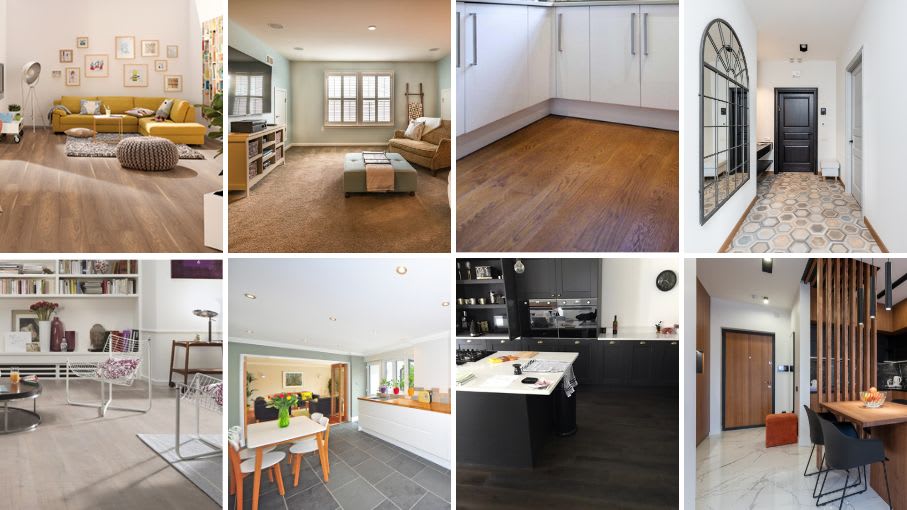
2. Floor Traffic
Who lives in the household? If there are high levels of traffic in your home, you own pets, or have children, then a more durable floor may be needed. In this case, you will want to consider engineered wood flooring.
If your budget is low, then LVT is your best bet. Luxury vinyl tiles are more durable than laminate flooring, but much less costly than solid wood or engineered wood flooring. Plus, thanks to the waterproof properties of LVT, you could place it all around the home. Ordering larger amounts of one floor is a great way to save money, particularly when there is a sale. For example, our sales are based on a percentage. Therefore, the more you order, the higher your percentage of savings!
3. Durability & Lifespan
How long do you plan on living in your new home? If you’re hoping to make your first home your forever home, then it’s worth investing in a floor that lasts. This will save you much more money in the long run if your budget allows for it.
In terms of lifespan, you will find that our engineered and solid wood floors will last the longest. However, solid wood flooring is one of the most expensive floors you can choose. It is also the least water resistant. Therefore, we think engineered wood flooring is the best choice in terms of durability and lifespan. Not only is it highly durable and could add value to your home, but it also has a lifespan of 10-15 years minimum in most cases.
We hope that our blog has helped you to reach a conclusion. If you are still unsure about anything, please do contact us and we will answer any queries. Alternatively, if you are ready to begin your search for a new floor, visit our clearance to keep costs low.
which-flooring-is-best-for-first-time-buyers