


When it comes to choosing the right flooring species for your home, engineered wood is often at the top of the list. But even within that category, homeowners often find themselves debating between two favourites: engineered oak flooring and engineered walnut flooring.
Both offer style, durability, and long-lasting quality — but they also bring distinct personalities to a space. Whether you’re redesigning a busy living area, updating a hallway, or revamping the family dining room, understanding the key differences between oak and walnut can help you make the right decision for your home.
The Basics: What They Have in Common
Before diving into the differences, let’s look at what engineered oak and walnut flooring share:
-
Real wood surface: Both feature a top layer of genuine timber, giving you the authentic look and feel of natural wood.
-
Engineered core: Their multi-layered construction offers excellent stability, making them less prone to warping and ideal for busy households.
-
Compatibility with underfloor heating: A big plus for modern homes.
-
Range of finishes: Available in brushed & oiled, matt lacquered, and more.
-
Multiple widths and thicknesses: From standard to extra wide planks, and from 10mm to 20mm thick.
These shared qualities make both oak and walnut a smart choice for family homes — but the differences in style, durability, and practicality are where your decision will really take shape.
Engineered Oak: Timeless, Versatile, and Family-Friendly
Engineered oak flooring is known for its classic look and incredible versatility. Its warm, golden tones work in almost any room, from traditional cottages to modern open-plan spaces.
Key Benefits:
-
Hardwearing: Oak is a naturally strong hardwood, which means it holds up well to foot traffic, children, pets, and daily wear and tear.
-
Wide variety of shades: From light-coloured engineered wood flooring to golden oak and darker, smoked tones.
-
Finish flexibility: Works beautifully with rustic handscraped finish, smooth lacquered surfaces, or brushed & oiled finishes.
-
Budget-friendly options: Engineered oak is widely available, with many choices in the under £30 to £40–£50 per m² range.
Perfect For:
-
Hallways, kitchens, and busy family rooms
-
Homes with a more casual, lived-in feel
-
Parents wanting a floor that’s forgiving with spills, scratches, and scuffs
Engineered oak is often seen as the go-to choice for family homes because it balances beauty and durability with a bit of everyday flexibility.
Engineered Walnut: Rich, Elegant, and Sophisticated
Engineered walnut flooring offers something a little different — a deeper, richer tone that brings instant luxury to a space. It’s typically a darker wood with a striking grain, often used to make a design statement.
Key Benefits:
-
Stunning appearance: Walnut’s deep brown hues and flowing grain add drama and sophistication.
-
Unique character: No two boards look quite the same, giving your floor a natural, bespoke feel.
-
Ideal for formal spaces: Works well in living rooms, home offices, or bedrooms where you want a high-end finish.
Things to Consider:
-
Softer wood: Walnut isn’t quite as hard as oak, so while it’s still a durable option, it may show marks a bit more easily in high-traffic zones.
-
Higher cost: Typically found in the £40–£50 per m² and over £50 per m² price brackets.
-
Style-specific: Its bold look isn’t always as neutral or adaptable as oak, so consider how it fits your long-term design plans.
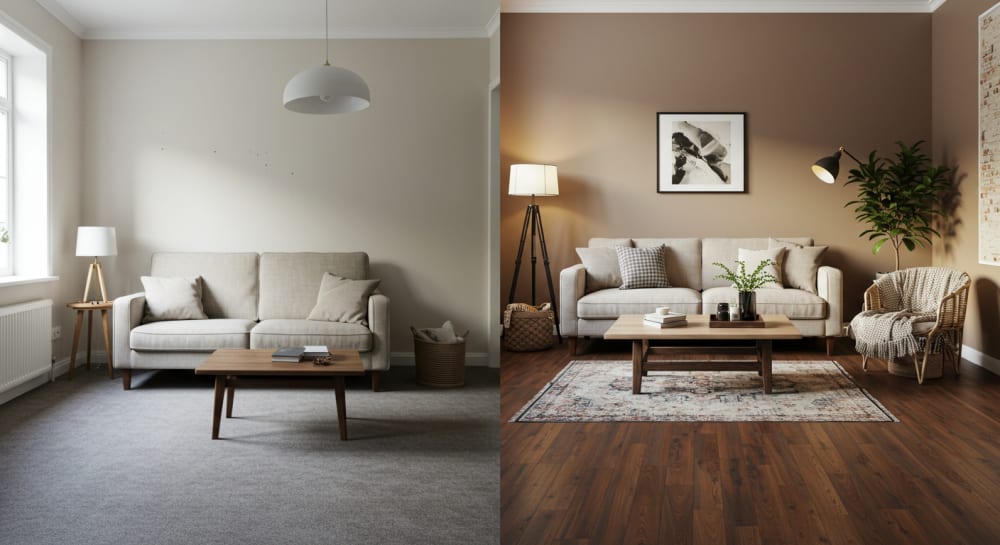
Side-by-Side Comparison
|
Feature |
Engineered Oak |
Engineered Walnut |
|
Colour Range |
Light to medium (natural, golden, smoked) |
Medium to dark (rich browns) |
|
Grain Pattern |
Subtle, classic, consistent |
Flowing, bold, dramatic |
|
Durability |
Very durable and dent-resistant |
Slightly softer, may show dents |
|
Style Flexibility |
Works with any interior |
More suited to luxury or formal spaces |
|
Finish Options |
Wide range (brushed, oiled, lacquered) |
|
|
Price Range |
More budget-friendly options |
Generally higher-end pricing |
|
Family Suitability |
Excellent for busy households |
Ideal for quieter, lower-traffic rooms |
Which One Is Right for Your Family Home?
Here’s how to choose based on your needs:
Choose Engineered Oak if:
-
You want a tough, practical floor that looks great in every room
-
Your home has lots of foot traffic, pets, or kids
-
You like to redecorate often and need a flexible base colour
-
You’re looking for good value and lots of options
Choose Engineered Walnut if:
-
You’re creating a luxurious or formal interior
-
You love rich, dramatic tones and bold design
-
The room has less traffic or you’re happy to care for a slightly softer wood
-
You’re happy to invest in a premium floor for long-term style
Bringing It All Together
Both oak and walnut engineered flooring offer beauty, performance, and long-term value. It really comes down to your lifestyle, your interior style, and how much foot traffic your rooms get.
-
If you want a warm, welcoming, hardwearing floor with lots of choice, oak is a safe bet.
-
If you’re after something bold, refined, and luxurious, walnut may be worth the splurge.
Whatever you choose, you’ll be investing in a floor that looks incredible, feels comfortable underfoot, and stands the test of time in your family home.
Explore more at Flooring365.co.uk for our full range of engineered oak and engineered walnut flooring options in every finish, shade, and size.
Read the ulitaimate engineered wood flooring buyers guide here: https://flooring365.co.uk/blog/post/the-ultimate-guide-to-engineered-wood-flooring.html


