


Choosing the right flooring colour is one of the most important decisions you’ll make when designing a space. It sets the tone (quite literally!) for the entire room. If you’re considering engineered wood flooring, the colour spectrum typically falls into two distinct categories — cool tones and warm tones.
Each tone creates a very different atmosphere, and the right one can elevate your interior style, improve lighting flow, and complement your furnishings perfectly. But how do you know which one is right for you?
In this guide, we’ll walk you through the key differences between cool and warm-toned engineered wood flooring, their effect on space and light, and how to pair them with your interior design.
What Are Cool Tones?
Cool-toned engineered wood flooring includes shades that have undertones of grey, blue, or even soft taupe. These tones tend to feel fresh, airy, and contemporary — ideal for modern spaces or rooms with a minimalist design aesthetic.
Examples of cool tones in engineered wood:
-
Soft ash-toned finishes
-
Light smoked engineered wood flooring with blue-grey hues
Cool tones help create a serene and open feel, particularly useful in small rooms or spaces with lots of natural light.
What Are Warm Tones?
Warm-toned engineered wood flooring leans into golden, reddish, or brown hues. These floors often feel rich, inviting, and timeless — bringing cosiness and depth to your space.
Examples of warm tones in engineered wood:
-
Natural oak with warm undertones
-
Mid-brown or chestnut stains
Warm flooring is perfect for traditional homes or any room where you want to create a comforting, welcoming vibe.
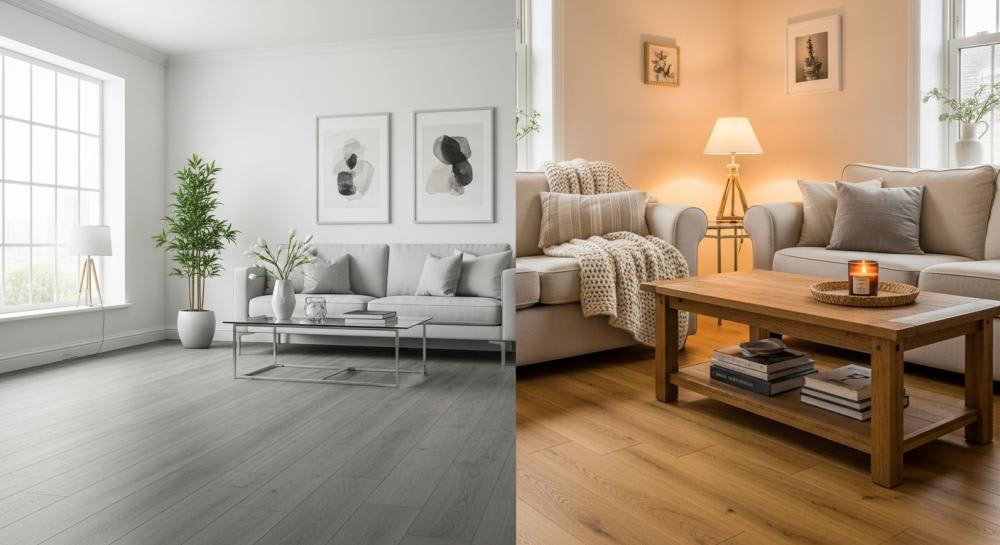
Visual Effects: How Tones Impact a Room
Flooring colour has a dramatic effect on how your space looks and feels, especially in relation to room size and light levels.
Cool-toned floors:
-
Make spaces feel larger and more open
-
Reflect more light, especially in lighter shades
-
Work well with modern decor, glass, and metallic accents
Warm-toned floors:
-
Create a cosy, grounded atmosphere
-
Add richness and contrast to lighter walls
-
Pair beautifully with soft furnishings and natural textures
Choosing between them is often about deciding how you want your space to feel: light and modern or warm and inviting.
Interior Styles and Tone Pairings
Let’s look at which interior styles suit each tone and how to create a cohesive design.
Cool Tones Work Best With:
-
Scandinavian interiors: Pale grey flooring with white walls and light wood furniture
-
Minimalist styles: Grey or whitewashed planks with clean lines and monochrome accents
-
Coastal decor: Soft grey flooring with navy, seafoam, or sandy tones
Warm Tones Work Best With:
-
Traditional or rustic interiors: Golden or coffee-toned floors with earthy colours and antique furnishings
-
Farmhouse style: Natural oak flooring with warm whites, sage, and brushed metals
-
Eclectic or vintage homes: Warm stains paired with patterned textiles and layered textures
Your flooring becomes the foundation for your entire design scheme — so think about what complements your wall colours, furniture, and overall vibe.
Room-by-Room Recommendations
If you’re still torn between warm and cool tones, consider the room type and how you use it.
Best rooms for cool-toned engineered wood:
-
Bathrooms and ensuites (where grey tiles and clean finishes dominate)
-
Loft conversions or home offices for a light, productive feel
-
Modern kitchens with gloss cabinetry or industrial accents
Best rooms for warm-toned engineered wood:
-
Living rooms and dining areas, where you want to feel cosy and grounded
-
Bedrooms, especially with soft lighting and warm-toned bedding
-
Hallways that benefit from a welcoming, character-filled entrance
Finish Options and Their Role
Finish also plays a big part in how your floor colour appears. Whether you choose a matt lacquered, oiled, or lacquered finish, it can shift the tone and sheen of your flooring.
-
Matt lacquered finishes soften the look and work beautifully with both cool and warm tones. They’re perfect for subtle, modern interiors.
-
Oiled finishes bring out the natural grain and add richness to warm tones like coffee or golden engineered wood flooring.
-
Lacquered finishes provide a polished look and reflect more light, enhancing cool tones in particular.
So, even if two planks are the same colour, a different finish can dramatically change how they feel in your room.
Plank vs Herringbone: Layout Matters Too
The layout of your engineered wood flooring can also influence how warm or cool it feels in a space.
-
Plank engineered wood flooring in cool tones creates a long, clean look that elongates a room and feels airy.
-
Herringbone engineered wood flooring in warm tones adds depth and luxury, making smaller rooms feel layered and rich.
Want a hybrid look? Try a smoked herringbone — offering the drama of warm undertones with a touch of modern edge.
Making the Final Choice
When choosing between cool and warm-toned engineered wood flooring, ask yourself:
-
What atmosphere do I want to create in the room?
-
What colours are already present (walls, furniture, décor)?
-
Is the space small or large? Does it get natural light?
-
Do I want a timeless look, or something on-trend?
If you’re unsure, consider ordering a few samples from both tone families. Seeing them in your own space — under your lighting and alongside your furnishings — makes all the difference.
Final Thoughts
Choosing between cool tones and warm tones in engineered wood flooring comes down to how you want your space to feel and function. Cool tones bring lightness and modernity, while warm tones offer comfort and character.
At Flooring365, we offer a wide variety of engineered wood flooring shades — from soft natural oak and grey to bold smoked and rich coffee tones. Whether you're after a sleek plank finish or a sophisticated herringbone layout, there’s something in every tone, style, and finish to suit your home.
Explore our full collection online today and bring your vision to life — with the perfect tone to match.


